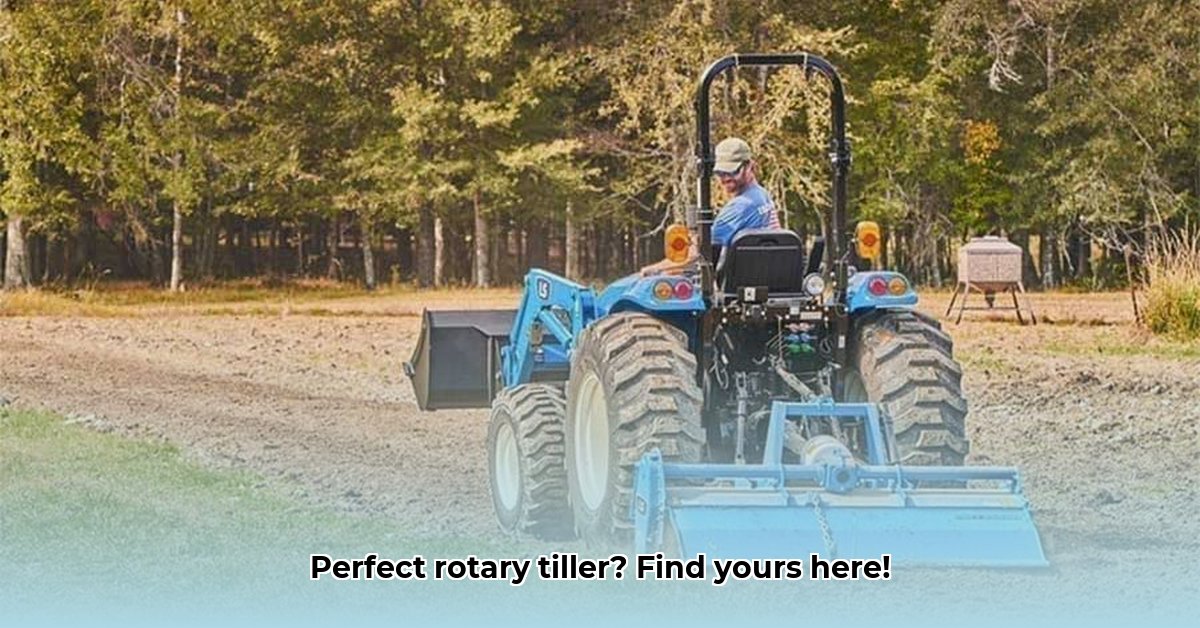
Finding the right rotary tiller for your compact tractor is crucial for efficient and sustainable farming. This guide provides a step-by-step process to help you select the ideal tiller, ensuring optimal performance and soil health. For more information on John Deere tillers, check out this helpful resource: John Deere Tillers.
Matching Your Tractor and Tiller: A Fundamental Partnership
Before exploring tiller options, understanding your tractor's capabilities is paramount. Consult your tractor's owner's manual to determine its PTO (Power Take-Off) horsepower and three-point hitch lift capacity. These specifications dictate the maximum size and weight of the tiller your tractor can safely and effectively handle. Overloading your tractor can lead to mechanical damage, reduced efficiency, and potential safety hazards. Don't skip this essential step!
Tiller Weight: Striking the Right Balance
Tiller weight significantly impacts performance, particularly in challenging soil conditions. Heavier tillers excel in heavy clay or rocky soil, providing the power to break up compacted ground. Lighter tillers are better suited for loose, easily manageable soils. However, excessive weight can overload your tractor, hindering maneuverability and increasing the risk of damage. The goal is to find a weight that your tractor can comfortably handle while providing effective tillage. Consider your soil type and the extent of your tilling needs when making this crucial decision.
Tines: The Heart of the Tilling Operation
The tines, or teeth, of your rotary tiller are the primary working components, directly impacting soil interaction. Different tine configurations are optimized for various soil types and tilling goals.
| Tine Configuration | Soil Type | Pros | Cons |
|---|---|---|---|
| L-shaped tines | Heavy clay, compacted | Aggressive tilling, thorough soil mixing | Requires more power, potential for soil compaction if misused |
| C-shaped tines | Loam, sandy soils | Gentle tilling, minimal soil disruption | Less effective on heavily compacted soil |
| Hoe-style tines | Light, loose soil | Minimal soil disturbance, ideal for seedbeds | Ineffective for compacted or hard-packed soils |
Choosing the right tine configuration directly influences the quality of your tillage. Aggressive tines are necessary for breaking up heavily compacted ground, while gentler tines are ideal for seedbed preparation. Consider your soil’s characteristics and your desired outcome when making your selection.
Rotation Direction: Forward or Reverse?
Rotary tillers offer two rotation directions: forward and reverse. Forward-rotating tillers throw soil away from the tractor, creating a relatively smooth finish suitable for lighter soils and seedbed preparation. Reverse-rotating tillers pull soil towards the tractor, beneficial for burying debris and creating a more even surface in heavier soils. The optimal choice depends on your soil type, tilling objectives, and personal preferences. Some farmers find it advantageous to experiment with both types to determine which suits their needs best. Isn't it fascinating how seemingly small choices can significantly impact your results?
PTO Protection: Safeguarding Your Investment
Unexpected encounters with rocks or other buried obstacles are inherent risks during tilling. PTO (Power Take-Off) protection systems like shear bolts and slip clutches safeguard your tractor's PTO shaft from excessive stress. Shear bolts are inexpensive and designed to break under extreme stress, preventing damage to more costly components but requiring replacement after each incident. Slip clutches allow for some slippage before engaging a safety mechanism, preventing sudden stoppages and costly repairs. The decision between these systems reflects a trade-off between upfront cost and potential long-term savings. Which system offers better value for your operation?
Maintenance and Safety: A Foundation for Longevity
Regular maintenance is essential for extending the life of your tiller and ensuring optimal performance. This involves regular inspection of tines for wear and tear, lubrication of moving parts, and cleaning to remove accumulated soil and debris. Preventative maintenance significantly reduces the likelihood of costly repairs down the line. Remember, safety is paramount. Always wear appropriate PPE (Personal Protective Equipment), including safety glasses, gloves, and sturdy footwear. Securely attach the tiller to your tractor before operation, and maintain awareness of potential obstacles. A cautious and responsible approach mitigates the risk of accidents and injuries.
Conclusion: Choosing the Right Tiller for Sustainable Farming
Selecting the right rotary tiller is a significant decision impacting your farming efficiency and long-term success. By carefully considering tiller weight, tine configuration, rotation direction, and PTO protection, along with implementing a consistent maintenance schedule and emphasizing safety protocols, you can ensure your tiller operates effectively and contributes to sustainable agricultural practices. Remember to consult with local agricultural experts or equipment dealers to receive personalized advice tailored to your specific circumstances. Happy tilling!
Key Takeaways:
- Matching tiller size and weight to your tractor's capabilities ensures both efficiency and longevity.
- Soil type significantly influences the choice of tine configuration and rotation direction.
- Prioritizing regular maintenance and safety practices is crucial for maximizing tiller lifespan and minimizing risks.